 RelocateCompass
EU Blue Card
For highly qualified specialists with a German job offer and salary above the Blue Card threshold.
Up to 4 years, path to PR · 1–3 monthsLearn more →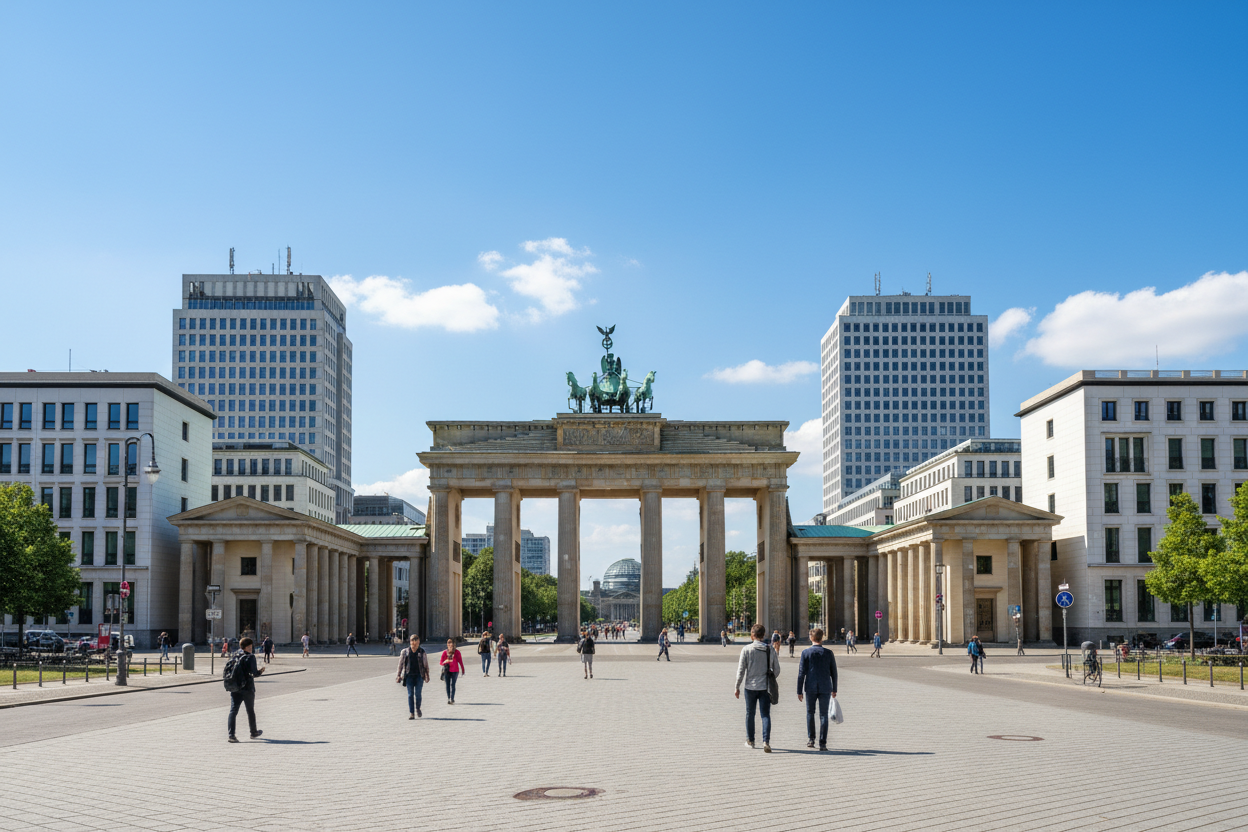
Europe's economic powerhouse
Germany is a practical relocation choice for people focused on skilled employment, engineering, technology, healthcare, research and industrial careers. Berlin has a large international and startup scene, Munich combines high salaries with very high housing costs, Frankfurt is finance-heavy, while Hamburg, Cologne and many mid-sized cities offer different job and lifestyle mixes. The federal structure matters: rent, local administration, transport and even everyday culture vary noticeably by state and city. German is not equally essential in every international role, but it becomes much more important for housing, bureaucracy, healthcare and long-term career mobility. A strong Germany plan therefore starts with the job market and residence route, then compares net salary against taxes, rent and compulsory insurance costs.
Key facts for a first relocation decision.
Choose the situation closest to yours, then check the routes that may fit.
Check my eligibility →The main routes differ by work, income, study, investment and personal circumstances.
For highly qualified specialists with a German job offer and salary above the Blue Card threshold.
Up to 4 years, path to PR · 1–3 monthsLearn more →Allows qualified professionals to enter Germany and search for a job on-site — no job offer required for the points-based Chancenkarte route.
6 months (Job Seeker) or 1 year (Chancenkarte) · 4–12 weeksLearn more →For freelancers and self-employed professionals with viable clients and income in Germany.
1–3 years · 2–4 monthsLearn more →For study at German universities, many of which charge low or no tuition.
Duration of study · 4–8 weeksLearn more →For spouses, children, and eligible family members joining a resident or citizen in Germany.
Linked to sponsor status, renewable · 2–6 monthsLearn more →Compare your monthly income with the one-person baseline in our current cost model.
Typical monthly costs for one person in our current model.
Salary, language and work-permission considerations.
Use this as a planning overview, then verify your route.
A baseline for planning before you compare individual cities and neighborhoods.
Actual rent varies substantially by location and property type.
Start with the location factors already available in our country data, then compare city-level costs before choosing an area.
A useful starting point for comparing national institutions, jobs and services.
Climate can vary within a country, so check the exact city before moving.
Local language needs can affect work, housing and daily administration.
Use the calculator to compare your real household profile and destination.
A neutral check against the main advantages and trade-offs in our current country profile.
A route-neutral overview. Exact requirements and timelines depend on the country, visa and your personal circumstances.
A practical sequence from deciding to move through settling in.
Continue planning with calculators built around the next decision you need to make.
Common questions people ask when planning a move to Germany.
Compare Germany's climate regions, cities and neighborhoods to find the best fit for your lifestyle.
Climate diversity of the country
Maritime climate. Rainy but mild. Wealthy Hanseatic cities.
Temperate climate, industrial region. Densely populated, good infrastructure.
Warmest and most scenic south. Alps nearby, high standard of living.
Affordable prices, cultural life, young scene. Salaries slightly lower.
Compare Germany’s major relocation hubs by jobs, rent, transport and neighborhood lifestyle. Rent ranges are approximate monthly long-term market ranges.
Germany's capital. Capital of art, startups, and freedom. Largest Russian-speaking city in Germany.
Northeast Germany, surrounded by Brandenburg state, no sea accessMost popular neighborhood for young families, expats and creative people. Cafés, organic shops, walkable streets. Many Russian speakers.
Historic and business center. Brandenburg Gate, government quarter, top museums. Expensive and touristy.
Berlin's iconic districts. Large Turkish-Arab community, hipsters, best clubs in the world. Contrasting and vibrant.
West Berlin. Luxury shops, opera, wide boulevards. More conservative and quiet than the east. Many Russian expats.
Popular with young people and students. East Side Gallery, startups, clubs.
Quiet green northern districts with affordable prices and family atmosphere. Many parks, good schools.
Capital of Bavaria. Germany's richest and most expensive city. BMW, Oktoberfest, Alps an hour away.
Southern Germany, Bavaria, at the foothills of the Alps, on the Isar RiverUniversity quarter with museums, galleries and cafés. Young intellectual vibe but pricey.
Munich's historic center. Marienplatz, Hofbräu, luxury shops. Most expensive and beautiful district.
Charming neighborhood east of the Isar. Small squares, cafés, Viktualienmarkt nearby. Popular with expats.
Western districts with more affordable prices and diverse population. Good infrastructure, fewer tourists.
Quiet family neighborhood near Nymphenburg Palace. Wide streets, parks, good schools. Ideal for families.
Germany’s major northern port city with strong logistics, media, aviation and tech sectors, excellent public transport and a high quality of life.
Elbe River, northern Germany, close to the North SeaPopular inner-west area with cafés, parks and fast U-Bahn access. Good balance for professionals and families.
Former independent city turned lively Hamburg district with restaurants, independent shops and strong S-Bahn links.
New-build waterfront district next to the historic centre and major offices.
Germany’s finance and international business hub, with one of Europe’s best-connected airports and strong demand for skilled professionals.
Main River, Hesse, central-western GermanyPrestigious area near the banking district, university and Palmengarten.
Popular south-bank district with museums, restaurants and quick links to the centre.
Highly livable neighborhoods northeast of the centre with markets, cafés and parks.
Large Rhine city known for media, insurance, universities and a particularly open social culture. Strong regional rail links across western Germany.
Rhine River, North Rhine-WestphaliaFormer industrial area now known for street art, music, bars and a younger international crowd.
One of Cologne’s most sought-after inner-city areas, packed with cafés, restaurants and boutiques.
Popular south-central area with Gründerzeit buildings, parks and a strong neighborhood identity.