 RelocateCompass
MM2H (My Second Home)
Long-term residence for financially independent foreigners who want Malaysia as a stable base.
5 years (Silver), 15 years (Gold), 20 years (Platinum) · 3–6 monthsLearn more →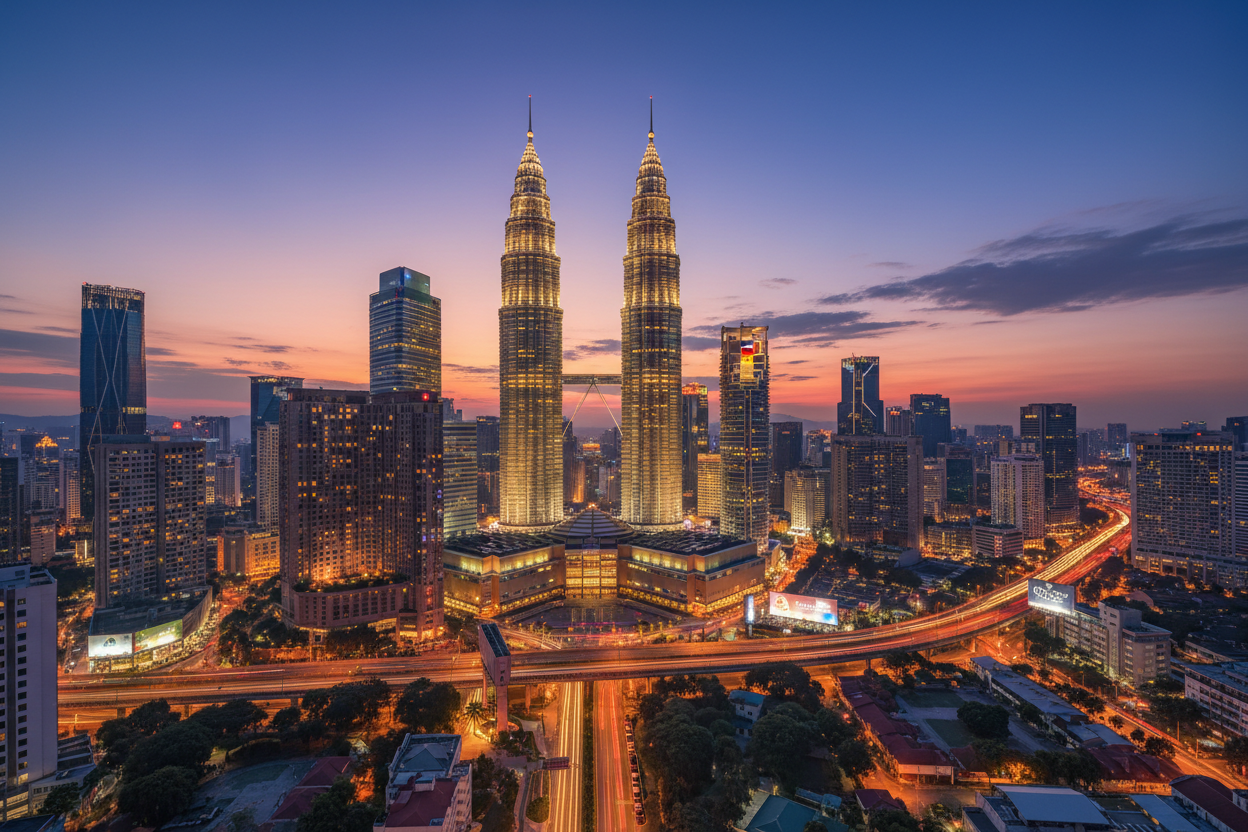
Asia's gem with a low cost of living
Malaysia is attractive to international residents who want modern Asian-city infrastructure without Singapore-level living costs. Kuala Lumpur offers the broadest mix of jobs, international schools, private healthcare and high-rise housing; Penang combines a strong food and heritage scene with a smaller urban scale; Johor sits close to Singapore; islands and East Malaysia create very different lifestyle options. English is widely used in business and urban services, while Malay remains important for local integration. The climate is hot, humid and rainy throughout the year, so air-conditioning and transport choices affect everyday costs. Long-stay options such as MM2H and digital-nomad routes should be evaluated separately from local employment because their financial and work-permission rules differ.
Key facts for a first relocation decision.
Choose the situation closest to yours, then check the routes that may fit.
Check my eligibility →The main routes differ by work, income, study, investment and personal circumstances.
Long-term residence for financially independent foreigners who want Malaysia as a stable base.
5 years (Silver), 15 years (Gold), 20 years (Platinum) · 3–6 monthsLearn more →Work residence pass for skilled employees hired by a Malaysian company.
1–2 years · 1–2 monthsLearn more →Digital nomad pass for remote professionals, freelancers, and IT specialists working for foreign clients.
1 year, renewable · 2–4 weeksLearn more →For international students admitted to Malaysian universities and approved institutions.
Duration of study · 4–6 weeksLearn more →Compare your monthly income with the one-person baseline in our current cost model.
Typical monthly costs for one person in our current model.
Salary, language and work-permission considerations.
Use this as a planning overview, then verify your route.
A baseline for planning before you compare individual cities and neighborhoods.
Actual rent varies substantially by location and property type.
Start with the location factors already available in our country data, then compare city-level costs before choosing an area.
A useful starting point for comparing national institutions, jobs and services.
Climate can vary within a country, so check the exact city before moving.
Local language needs can affect work, housing and daily administration.
Use the calculator to compare your real household profile and destination.
A neutral check against the main advantages and trade-offs in our current country profile.
A route-neutral overview. Exact requirements and timelines depend on the country, visa and your personal circumstances.
A practical sequence from deciding to move through settling in.
Continue planning with calculators built around the next decision you need to make.
Common questions people ask when planning a move to Malaysia.
Compare Malaysia's climate regions, cities and neighborhoods to find the best fit for your lifestyle.
Climate diversity of the country
Capital region. Most developed, expensive, international.
Island with rich culture and cuisine. Popular with digital nomads.
Border with Singapore. Fast-developing, affordable prices.
Wild nature, diving, orangutans. Exotic, but fewer conveniences.
Compare Malaysia’s main relocation hubs by rent, transport, lifestyle and everyday practicality. Rent ranges are approximate monthly long-term market ranges.
Malaysia's capital. Petronas Towers, tropical heat, incredible food and amazingly low prices.
Peninsular Malaysia, confluence of Gombak and Klang rivers, center of the countryPetronas Towers, world-class malls, best restaurants. Center of KL business life.
Main expat enclave in KL. International schools, malls, world cuisine restaurants. Many Korean, Japanese and Western expats.
Prestigious hillside areas with embassies and villas. Vibrant restaurant scene at Bangsar Village.
Authentic Malay and Indian quarters with street food and markets. Very cheap but less comfortable.
KL satellite cities with more affordable prices. Good malls, parks, family atmosphere.
Island with rich culture, amazing food and a beautiful UNESCO-listed old city. Popular with digital nomads.
Island off northwest coast of Malaysia, Strait of MalaccaUNESCO site. Street art, shophouses, incredible street food. Popular with creative expats and digital nomads.
Beach resort area in the north of the island. Quiet, safe, by the sea. Popular with families and long-term expats.
Southern Malaysian city directly across from Singapore. Popular with cross-border workers, families and people seeking newer housing at lower prices than Kuala Lumpur.
Southern tip of Peninsular Malaysia, Johor Strait opposite SingaporeBest for people commuting to Singapore or wanting quick access to the Causeway, malls and central services.
Popular east-JB neighborhood known for restaurants, cafés and modern condos, especially among younger professionals.
Master-planned western growth corridor near international schools, business parks and Legoland.
Sabah’s coastal capital and gateway to Borneo. Smaller and calmer than Kuala Lumpur, with strong tourism, healthcare and regional business activity.
Northwest coast of Sabah, Malaysian Borneo, South China SeaCentral KK near offices, malls, waterfront restaurants and the ferry terminal.
Established area north of the centre with hospitals, schools, sports facilities and larger condo developments.
Coastal area near Tanjung Aru Beach and the airport, popular for lifestyle and convenience.
Historic UNESCO-listed city with a slower pace, low housing costs and strong tourism economy. Attractive for retirees, remote workers and families prioritising affordability.
Southwest coast of Peninsular Malaysia on the Strait of MalaccaCentral area near major heritage sites, malls and restaurants. Convenient but busier during weekends and holidays.
Popular modern neighborhood just west of the historic core with newer apartments and a strong restaurant scene.
Eastern suburban area with universities, government offices and larger residential developments.