 RelocateCompass
D7 Visa (Passive Income)
For people with stable passive income such as pensions, rental income, dividends, or long-term savings.
2 years, renewable · 2–4 monthsLearn more →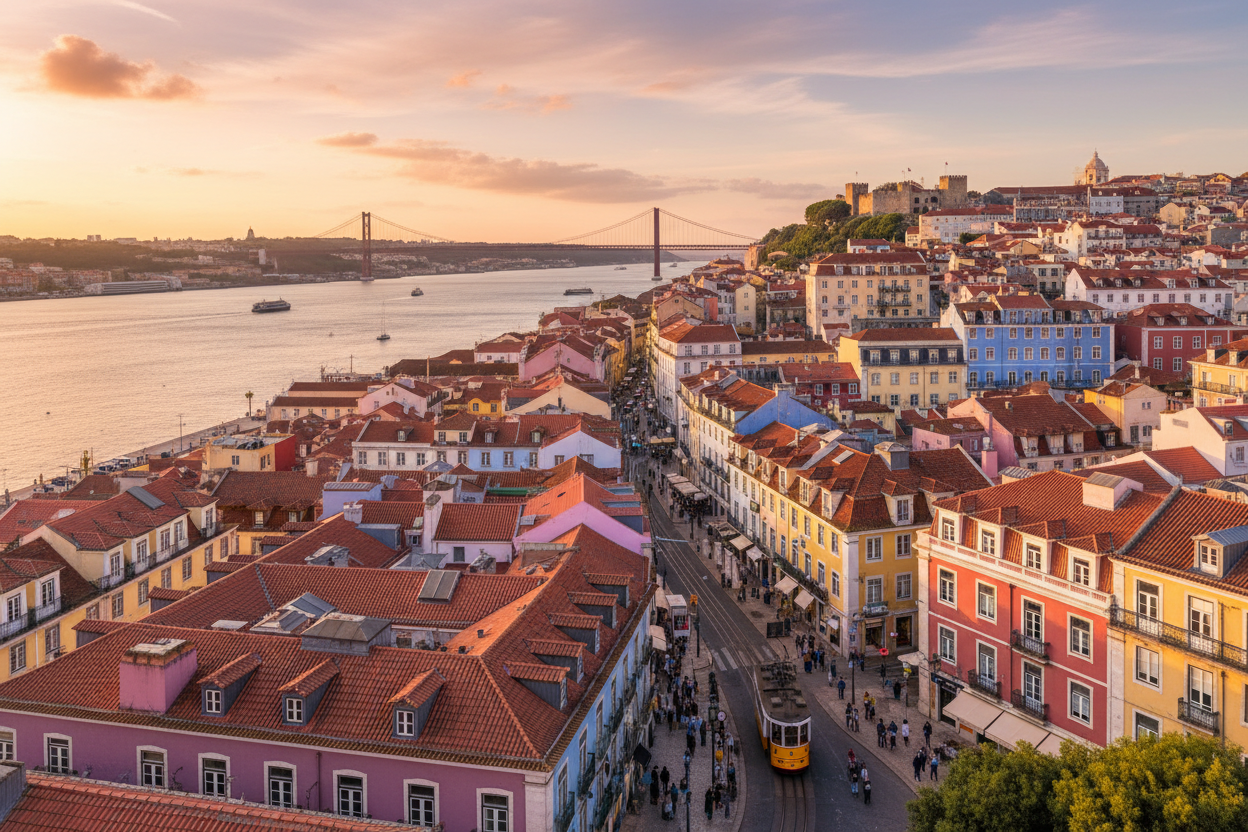
Cosy Europe on the Atlantic coast
Portugal appeals to people who want an EU base with Atlantic weather, compact cities and a comparatively relaxed pace of life. Lisbon has the largest concentration of international employers and services but also the greatest housing pressure; Porto is smaller and cooler, with a strong cultural identity; the Algarve is more seasonal and tourism-driven; central and northern towns can be quieter and less expensive. Portuguese becomes increasingly useful outside international workplaces, even though English is common in many urban and tourism settings. For a realistic move, compare residence-route requirements with local salaries, rent, private or public healthcare access and the large cost gap between Lisbon, the coast and smaller inland locations.
Key facts for a first relocation decision.
Choose the situation closest to yours, then check the routes that may fit.
Check my eligibility →The main routes differ by work, income, study, investment and personal circumstances.
For people with stable passive income such as pensions, rental income, dividends, or long-term savings.
2 years, renewable · 2–4 monthsLearn more →For remote employees and freelancers earning income from outside Portugal.
1 year, or residence route, renewable · 1–3 monthsLearn more →Residence route for qualifying investments — now focused on funds, research, culture, and business rather than residential real estate.
2 years, renewable · 3–6+ monthsLearn more →Fast-track route for skilled employees hired by certified Portuguese technology companies.
2 years · 1–2 monthsLearn more →For study at Portuguese universities, colleges, and approved institutions.
Duration of study · 1–2 monthsLearn more →Compare your monthly income with the one-person baseline in our current cost model.
Typical monthly costs for one person in our current model.
Salary, language and work-permission considerations.
Use this as a planning overview, then verify your route.
A baseline for planning before you compare individual cities and neighborhoods.
Actual rent varies substantially by location and property type.
Start with the location factors already available in our country data, then compare city-level costs before choosing an area.
A useful starting point for comparing national institutions, jobs and services.
Climate can vary within a country, so check the exact city before moving.
Local language needs can affect work, housing and daily administration.
Use the calculator to compare your real household profile and destination.
A neutral check against the main advantages and trade-offs in our current country profile.
A route-neutral overview. Exact requirements and timelines depend on the country, visa and your personal circumstances.
A practical sequence from deciding to move through settling in.
Continue planning with calculators built around the next decision you need to make.
Common questions people ask when planning a move to Portugal.
Compare Portugal's climate regions, cities and neighborhoods to find the best fit for your lifestyle.
Climate diversity of the country
Mild climate, but cool Atlantic winds. Most expensive region.
Sunniest region. Touristy and expensive in summer, quiet in winter.
Wet and cool. Affordable prices, authentic Portugal.
Dry and hot in summer. Lowest housing prices in the country.
Compare Portugal’s major relocation hubs by lifestyle, rent, transport and everyday practicality. Rent ranges are approximate monthly long-term market ranges.
Portugal's capital, most popular city among expats. Hills, trams, and Atlantic breeze.
Mouth of the Tagus River, Atlantic coast, southwest Iberian PeninsulaMost expensive and fashionable area. Antique shops, top restaurants, art galleries. Favorite of creative, wealthy residents.
Historic Moorish quarter. Birthplace of fado. Diverse, affordable, actively changing. Great if you love authenticity.
Best value for money in Lisbon. Many expats, good infrastructure, lively multicultural neighborhood.
Quiet western district with Jerónimos Monastery and Tower of Belém. Green, safe, ideal for families.
Lisbon's oldest neighborhood with stunning river views. Beautiful, but overrun by tourists and overpriced for housing quality.
Northern suburbs with the lowest prices in Lisbon metro area. Good transport, few tourists.
Portugal's second city. More affordable, authentic and rainy. Port wine, azulejos, Atlantic spirit.
Mouth of the Douro River, northwest Portugal, Atlantic coastRapidly gentrifying neighborhood. Lots of young people, startups, cafés. Great price-to-atmosphere ratio.
Ribeira waterfront — heart of Porto. UNESCO, Dom Luís Bridge views, best restaurants. Very touristy though.
Favorite neighborhood of artists, students and young professionals. Cozy cafés, galleries, studios. Local life without tourist gloss.
Porto's most prestigious district on the Atlantic. Expensive mansions, tranquility, best air quality. Home to Porto's wealthy.
University campus and surrounding district. Most affordable prices in Porto. Perfect for students and budget-conscious expats.
Capital of the Algarve with an international airport, university, hospital and more year-round local life than many resort towns.
Ria Formosa lagoon, southern Portugal, central AlgarveCompact centre around the marina, old town and main shopping streets. Best for newcomers who want services and transport within walking distance.
Residential zone near the University of Algarve, airport and hospital facilities, with newer apartments and quieter streets.
Coastal living around Faro Beach and the Ria Formosa. Attractive for lifestyle, but more seasonal and less convenient for daily errands.
Compact northern Portuguese city with a large student population, lower rents than Lisbon or Porto and fast access to Porto and the Minho region.
Minho region, northern Portugal, around 55 km northeast of PortoCentral Braga around the cathedral, Avenida Central and main commercial streets. Best for newcomers who want to walk most places.
University of Minho area with newer apartments, services and a younger population.
Quieter southern residential zone with shopping centres, schools and larger apartments.
Historic university city between Lisbon and Porto. Strong healthcare and education sectors, compact scale and a large international student population.
Mondego River, central PortugalOld centre and university hill. Ideal for culture and walking, though the steep streets and older housing are not for everyone.
Popular area near Coimbra’s university hospitals with shops, services and a mix of professionals and students.
Newer residential and commercial area with larger apartments, schools and shopping.